

Procedures
Paediatric Surgical Procedures in Malaysia
Children may need surgery for many different reasons, from common conditions such as hernias and appendicitis to congenital conditions present from birth. The type of operation depends on the child’s age, diagnosis, symptoms and overall health. At Dr Nada’s paediatric surgical practice in Malaysia, paediatric surgical procedures are planned according to each child’s individual needs. Where appropriate, surgery may be performed using minimally invasive techniques such as laparoscopic or keyhole surgery. In other situations, open surgery may be the more suitable approach.
What Are Paediatric Surgical Procedures?
Paediatric surgical procedures are operations used to treat conditions in babies, children and teenagers. These procedures may involve the abdomen, bowel, urinary system, reproductive system, chest or lungs. Some children require surgery because of a condition they were born with, while others may develop a surgical problem later in childhood. The recommended procedure depends on the diagnosis and the child’s individual clinical needs.
Herniotomy
Herniotomy is commonly performed to treat an inguinal hernia in children. An inguinal hernia occurs when tissue pushes through a weak area in the groin. During the procedure, the opening that causes the hernia is closed.
Appendicectomy
Appendicectomy is surgery to remove the appendix. It may be needed when a child has confirmed appendicitis. Depending on the child’s condition, the appendix may be removed using keyhole surgery or an open approach.
Penile Reconstruction
Penile reconstruction is used to correct certain abnormalities affecting the penis. It may form part of treatment for conditions such as hypospadias. The type of reconstruction depends on the child’s individual anatomy and needs.
Pyeloplasty
Pyeloplasty is used to treat a blockage where the kidney connects to the ureter. This area is called the ureteropelvic junction. A blockage here can affect the normal flow of urine and may lead to hydronephrosis.The procedure repairs the narrowed area to improve urine drainage. It can be performed using an open or minimally invasive approach when appropriate.
Heminephrectomy
Heminephrectomy is an operation to remove part of a kidney. It may be considered in children with certain kidney abnormalities, including some duplex kidneys where one part is significantly affected.The decision depends on the child’s kidney structure, function and overall condition.
Lung Resection
Lung resection involves removing part of a lung. It may be considered for selected congenital or acquired lung conditions.In suitable cases, the affected portion of the lung may be removed using thoracoscopic, or keyhole, surgery. Open surgery may be considered when a minimally invasive approach is not appropriate.
Paediatric Bowel Surgery
Some babies and children need surgery for conditions affecting the bowel. These may include intestinal atresia, Hirschsprung’s disease and other causes of bowel obstruction. Colonic atresia is a rare congenital condition where part of the colon, or large intestine, is absent or completely blocked. This can prevent bowel contents from passing normally.
A newborn with feeding difficulties, abdominal swelling or difficulty passing meconium does not necessarily have colonic atresia. These signs can have many causes and need proper medical assessment. Doctors may use an abdominal X-ray or a contrast enema to help examine the bowel. If colonic atresia is confirmed, neonatal surgery may be required. Treatment depends on the location of the blockage, the condition of the bowel, the baby’s overall health and any associated abnormalities. In some cases, the affected bowel is removed and the healthy ends are joined. This is called a bowel anastomosis. A stoma, which allows bowel contents to pass through an opening in the abdomen, may be needed in some situations.
Keyhole and Open Surgery
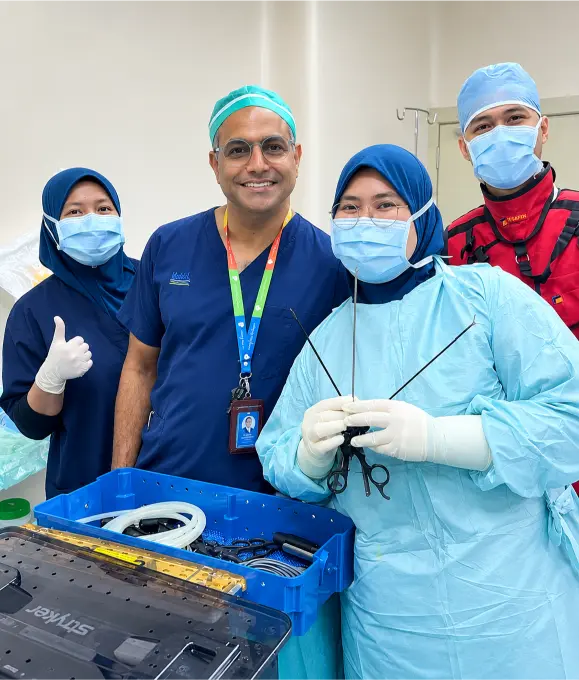
Some paediatric surgical techniques use minimally invasive surgery. Laparoscopic surgery, commonly known as keyhole surgery, uses small incisions, a camera and specialised instruments to perform selected operations.Thoracoscopic surgery uses a similar technique for certain procedures involving the chest and lungs. Keyhole surgery is not suitable for every child or every condition. In some cases, traditional paediatric surgery, or open surgery, may provide more appropriate access to the affected area.The surgical team will choose the approach based on the child’s condition, anatomy, age, size and overall health.

What Happens Before Surgery?
Before surgery, the medical team will review the child’s symptoms, medical history and examination findings. Tests such as X-rays, ultrasound, CT scans, MRI or blood tests may be used when needed.
Parents can discuss the proposed procedure, treatment options, possible risks and follow-up care with the surgical team.Some operations need to be performed urgently, while others can be planned. The timing depends on the child’s individual condition.
Recovery After Surgery
Recovery is different for every child. It depends on the type of operation, the condition being treated, the child’s age and general health.The medical team will provide parents with individual advice about feeding, wound care, medicines, activity and follow-up after surgery.
Paediatric Surgery in Malaysia
Children may require different levels of surgical care depending on their condition. Some may need a straightforward procedure, while others may require specialist neonatal, urological or thoracic surgery. Where necessary, paediatric surgeons may work together with neonatologists, paediatric urologists, radiologists, anaesthetists and other specialists to provide coordinated care.The focus is always on understanding the child’s condition and choosing an appropriate treatment approach.
Paediatric Surgical Assessment for Intussusception
Intussusception requires individual assessment because abdominal pain, vomiting and changes in bowel movements can have several possible causes. Assessment may include a physical examination, ultrasound and other investigations when required. Depending on the findings, treatment may involve supportive care, enema reduction or surgery. The treatment approach is selected according to the child’s clinical condition and response to treatment.
Frequently Asked Questions
Paediatric surgical procedures are operations used to treat surgical conditions in babies, children and teenagers. They can involve different areas of the body, including the abdomen, bowel, urinary system, chest and lungs.
Depending on the child's condition, procedures may include herniotomy, appendicectomy, penile reconstruction, pyeloplasty, heminephrectomy and lung resection.
No. Keyhole surgery can be useful for selected conditions, but open surgery may be more suitable in some cases. The decision depends on the child's individual circumstances.
Laparoscopic surgery is a keyhole technique that uses small incisions, a camera and specialised instruments to perform selected operations inside the abdomen.
A bowel anastomosis is a surgical connection between two sections of bowel, usually after an affected section has been removed.