

Pyeloplasty
Paediatric Pyeloplasty: Procedure, Treatment and Recovery
Pyeloplasty is a surgical procedure used in children to treat a blockage or narrowing at the pelvi-ureteric junction (PUJ), where the kidney connects to the ureter. When urine cannot drain normally through this area, it can collect in the kidney and cause hydronephrosis.
The pyeloplasty procedure involves correcting the narrowed section and reconstructing the connection between the kidney and ureter to provide a suitable pathway for urine drainage. It may be considered when investigations show significant obstruction or concerns about kidney drainage or function. Depending on the child’s condition, age, anatomy and other clinical findings, pyeloplasty may be performed through an open approach or using minimally invasive laparoscopic or keyhole surgery.
What Is Paediatric Pyeloplasty?
Paediatric pyeloplasty is a reconstructive operation performed to correct an obstruction at the pelvi-ureteric junction. The renal pelvis collects urine produced by the kidney, while the ureter carries urine from the kidney towards the bladder. When the PUJ is narrowed, urine may not pass normally into the ureter. This can cause urine to build up in the kidney and result in hydronephrosis. During the pyeloplasty procedure, the surgeon addresses the narrowed area and reconnects the renal pelvis with the ureter. The aim is to create a suitable passage for urine to drain from the kidney.
Why Is Pyeloplasty Performed in Children?
One of the main reasons for paediatric pyeloplasty is PUJ obstruction. This may be present from birth and can sometimes be detected during an antenatal ultrasound. Some children with PUJ obstruction have no noticeable symptoms and are diagnosed through imaging. Others may experience abdominal or side pain, urinary tract infections, vomiting or other urinary symptoms. Not every child with hydronephrosis requires surgery. Some children can be monitored with regular clinical assessments and imaging. Pyeloplasty may be considered when there is significant obstruction, poor urine drainage, changes in kidney function or other clinical concerns. The decision to proceed with surgery depends on the child’s individual condition and investigation results.

What Is Pelvi-Ureteric Junction Obstruction?
The pelvi-ureteric junction (PUJ) is the point where the renal pelvis of the kidney joins the ureter. Urine passes through this area before travelling down the ureter towards the bladder.
If the junction is too narrow or does not allow urine to pass normally, an obstruction can develop. This may cause enlargement of the renal pelvis and lead to hydronephrosis. PUJ obstruction can vary in severity, so some children may only require observation while others may require surgical correction.
What Are the Signs of PUJ Obstruction in Children?
PUJ obstruction does not always cause noticeable symptoms. Some children are diagnosed after an abnormality is identified during a routine or antenatal ultrasound.
When symptoms are present, a child may experience abdominal or side pain, recurrent urinary tract infections, fever associated with infection, nausea, vomiting or blood in the urine. Younger children may not be able to describe their symptoms clearly and may instead become unsettled, vomit or have changes in feeding. These symptoms can occur with other childhood conditions and do not confirm PUJ obstruction on their own. Medical assessment and appropriate investigations are important to determine the underlying cause.
How Is PUJ Obstruction Diagnosed?
Assessment usually begins with a review of the child’s symptoms, medical history and previous scan results. An ultrasound of the kidneys and urinary tract is commonly used to assess hydronephrosis and examine the appearance of the kidneys. When further information is required, a functional renal scan such as a MAG3 or DTPA scan may be used to assess kidney function and urine drainage. These investigations can help determine whether an obstruction is affecting the affected kidney. Depending on the child’s symptoms and medical history, urine or blood tests may also be considered. The results of these assessments are reviewed together when deciding whether continued monitoring or surgical treatment may be appropriate.
When Is Pyeloplasty Recommended?
Pyeloplasty is not automatically required whenever hydronephrosis is identified. Some children have mild or stable obstruction and can be followed through regular imaging and clinical assessment. Surgery may be considered when investigations show significant obstruction or poor urine drainage, particularly when there are concerns about the effect on kidney function. Recurrent symptoms or urinary infections may also be considered as part of the overall assessment. The timing of surgery varies between children. The paediatric surgeon considers factors such as the child’s age, symptoms, kidney function, imaging findings and general health when discussing treatment options.
How Is the Paediatric Pyeloplasty Procedure Performed?
The main purpose of the pyeloplasty procedure is to correct the narrowed area at the PUJ and provide a suitable route for urine to pass from the kidney into the ureter. During the operation, the surgeon identifies the obstructed section and addresses the narrowed portion. The renal pelvis and ureter are then reconstructed and reconnected. A temporary ureteric stent may be placed in some children to support urine drainage while the repaired area heals. Whether a stent is required depends on the surgical approach and the child’s individual circumstances. The exact steps of the procedure can vary between patients, and the treating surgical team will explain the planned approach before surgery.
Laparoscopic Pyeloplasty in Children
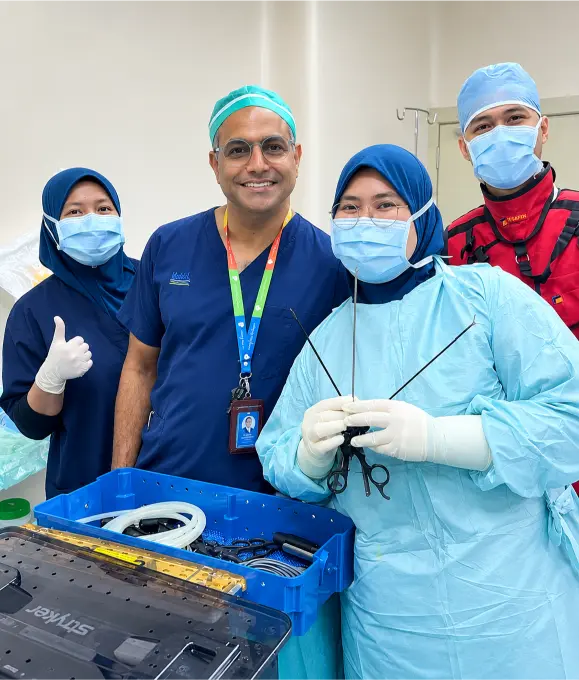
Laparoscopic pyeloplasty is a minimally invasive approach, also known as keyhole surgery. Instead of using one larger incision, the surgeon uses small openings to introduce a camera and specialised surgical instruments. The camera provides a view of the surgical area while the narrowed PUJ is reconstructed. Laparoscopic pyeloplasty may be considered for children who are suitable for this approach. Dr Nada Sudhakaran’s practice includes paediatric surgery, paediatric urology and minimally invasive or keyhole surgery, with pyeloplasty listed among his procedures. Laparoscopic surgery is not suitable for every child. Suitability depends on factors such as the child’s age, anatomy, previous medical or surgical history and the nature of the obstruction. The appropriate surgical approach is determined according to the child’s individual clinical circumstances.
Open Pyeloplasty
Open pyeloplasty is an established surgical approach for treating PUJ obstruction. It involves accessing the affected area through a surgical incision so that the narrowed junction can be corrected and reconstructed.
The choice between open and laparoscopic pyeloplasty depends on the individual child. A minimally invasive approach may not be appropriate in every situation. The surgeon will consider the child’s condition, anatomy, previous medical history and other clinical factors when discussing the available surgical options.
What Happens Before Pyeloplasty?
Before surgery, the paediatric surgeon reviews the child’s medical history, symptoms and investigation results. Parents are given information about the PUJ obstruction, why surgery may be considered and how the proposed pyeloplasty procedure will be performed. The discussion may include the proposed surgical approach, anaesthesia, the possible use of a temporary ureteric stent, expected hospital care, post-operative recovery and follow-up. Parents should also provide information about their child’s previous illnesses, allergies, medications and earlier operations so that the medical team can plan the procedure appropriately.
What Happens After the Pyeloplasty Procedure?
After pyeloplasty, the child is monitored by the medical team during the initial recovery period. Pain relief and other supportive care are provided according to the child’s condition. If a ureteric stent has been used, the parents will be informed about its purpose and the arrangements for its removal or management. Before the child goes home, the medical team provides instructions regarding wound care, medication, activity and follow-up. Parents should follow the post-operative instructions provided by the treating team and seek medical advice if they have concerns during recovery.
Recovery and Follow-Up After Pyeloplasty
Recovery following paediatric pyeloplasty varies from one child to another. Factors such as age, general health, surgical approach and individual circumstances can influence recovery. Follow-up is an important part of care because symptoms alone may not indicate how well the kidney is draining. The surgeon may recommend an ultrasound or other imaging during follow-up to assess the kidney and urinary tract. Further testing may be considered when additional information about kidney function or urine drainage is required. The timing and type of follow-up depend on the child’s condition and progress after surgery.
Recovery and Follow-Up After Pyeloplasty
Recovery following paediatric pyeloplasty varies from one child to another. Factors such as age, general health, surgical approach and individual circumstances can influence recovery. Follow-up is an important part of care because symptoms alone may not indicate how well the kidney is draining. The surgeon may recommend an ultrasound or other imaging during follow-up to assess the kidney and urinary tract. Further testing may be considered when additional information about kidney function or urine drainage is required. The timing and type of follow-up depend on the child’s condition and progress after surgery.
What Are the Risks of Paediatric Pyeloplasty?
Like other surgical procedures, paediatric pyeloplasty has potential risks. These may include bleeding, infection, urine leakage, anaesthetic-related complications and continued or recurrent narrowing at the PUJ.
In some situations, further assessment or treatment may be required if the obstruction persists or returns. The risks vary between children and may depend on the underlying condition and surgical approach. The treating paediatric surgeon should explain the relevant risks and considerations before the procedure.
How Does Dr Nada Provide Pyeloplasty Care for Children?
Dr Nada Sudhakaran is a Consultant Paediatric Surgeon & Urologist based in Kuala Lumpur. His practice includes paediatric surgery, paediatric urology and minimally invasive urology, with pyeloplasty listed among his procedures. When a child is assessed for possible PUJ obstruction, the medical history, symptoms and investigation results are reviewed to understand the child’s condition. The findings are then considered when discussing whether observation or surgical treatment may be appropriate. If pyeloplasty is recommended, the proposed procedure and available surgical approaches are explained to the parents. For suitable children, laparoscopic or keyhole surgery may be considered. The treatment approach depends on the child’s individual clinical findings rather than the diagnosis alone.
Frequently Asked Questions About Paediatric Pyeloplasty
Pyeloplasty is performed to correct an obstruction at the pelvi-ureteric junction and provide a suitable pathway for urine to pass from the kidney into the ureter.
No. Some children can be monitored when the obstruction is mild or kidney drainage remains satisfactory. Surgery may be considered when investigations show significant obstruction or concerns about kidney drainage or function.
Yes, laparoscopic pyeloplasty can be considered for selected children. Suitability depends on factors such as the child's age, anatomy, medical history and the nature of the obstruction.
A temporary ureteric stent may be used in some children to support urine drainage while the repaired area heals. The surgical team will explain whether a stent is appropriate for the child's procedure.
Follow-up may include clinical assessment and ultrasound imaging. Additional tests to assess kidney function or urine drainage may be recommended depending on the child's condition and progress.
Recovery varies between children. The surgical approach, age, general health and individual circumstances can influence the recovery period. The treating team will provide specific post-operative instructions.
Arrange a Paediatric Surgical Assessment
If your child has been diagnosed with PUJ obstruction or hydronephrosis and pyeloplasty has been recommended or discussed, a paediatric surgical assessment can help explain the condition and available treatment options.
Enquire about paediatric pyeloplasty assessment and treatment options with Dr Nada in Kuala Lumpur or Petaling Jaya, Selangor.