

Hydronephrosis
Hydronephrosis Treatment in Children Petaling Jaya ,Malaysia
Hydronephrosis in children means that the kidney has become swollen because urine is not draining normally. It can be mild and may improve with time, while some children may have a blockage that needs closer monitoring or treatment. The right hydronephrosis treatment in children depends on the cause, the child’s age, symptoms, kidney function and the severity of the condition. A specialist assessment helps determine whether your child needs observation, further tests or surgery.
What Is Paediatric Hydronephrosis?
Paediatric hydronephrosis means swelling or enlargement of the kidney’s drainage system caused by a build-up of urine. In some children, this happens because the flow of urine is partly or completely blocked.
One common cause is a narrowing where the kidney connects to the ureter, known as ureteropelvic junction (UPJ) obstruction. Other causes may include problems affecting the ureter, bladder or urinary tract. Mild hydronephrosis may improve with monitoring, while more significant obstruction may require treatment.
What Causes Hydronephrosis in Children?
Hydronephrosis may be present from birth or develop later in childhood. Possible causes include narrowing of the urinary tract, abnormal development of the ureter, urinary reflux or other conditions affecting normal urine drainage.
The cause cannot be determined from symptoms alone. Ultrasound and other investigations help the medical team understand how the urinary system is functioning.

Symptoms of Hydronephrosis in Children
Some children with hydronephrosis have no obvious symptoms, especially when the condition is detected during a pregnancy or routine ultrasound scan.
When symptoms occur, they may include abdominal or side pain, urinary problems, fever associated with urinary infection, blood in the urine or recurrent urinary tract infections.These symptoms can have many possible causes and do not necessarily mean a child has hydronephrosis.
How Is Hydronephrosis Diagnosed?
Assessment usually starts with a review of the child’s medical history and a physical examination. An ultrasound scan is commonly used to look at the kidneys and urinary tract.
Depending on the child’s condition, further tests may be recommended to assess urine drainage, kidney function or the cause of the obstruction. The appropriate investigations depend on the individual child.
Hydronephrosis Treatment in Children
Treatment depends on the severity and cause of the hydronephrosis. Some children may only need regular monitoring with clinical assessment and imaging. If there is significant obstruction or concern about kidney drainage, surgery may be considered. The decision is based on the child’s scan findings, kidney function, symptoms and overall clinical condition. Parents will be advised about the reason for treatment and the available options before any procedure is planned.
Hydronephrosis Surgery and Pyeloplasty
When hydronephrosis is caused by significant UPJ obstruction, a procedure called pyeloplasty may be considered.
Pyeloplasty involves removing the narrowed section and reconnecting the healthy parts of the urinary drainage system to allow urine to flow more normally from the kidney into the ureter.
The exact surgical approach depends on the child’s age, anatomy, diagnosis and clinical needs.
Minimally Invasive Surgery
For selected children, minimally invasive or keyhole techniques may be considered for certain urinary tract procedures. These approaches are not suitable for every child.
The decision depends on the underlying condition, the child’s age and anatomy, and the surgeon’s assessment. Parents can discuss whether a minimally invasive approach is appropriate during consultation.
Risks and Recovery
As with any surgical procedure, hydronephrosis surgery can have potential risks. These vary according to the child’s condition and the type of procedure performed.
Recovery also differs between children. The medical team will provide individual advice about hospital care, activity, follow-up and monitoring after treatment.
Regular follow-up may be recommended to assess urine drainage and kidney development or function where appropriate.
Paediatric Hydronephrosis Care With Dr Nada
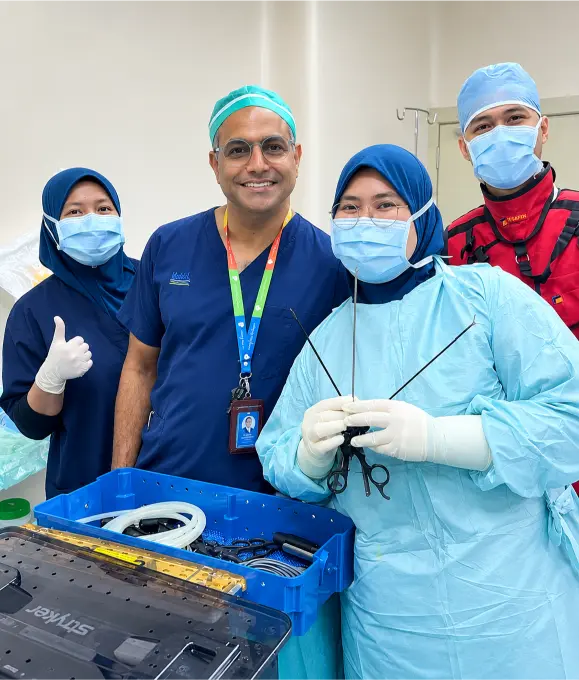
Dr Nada provides individualised assessment and treatment planning for children with urinary tract conditions. Each child’s care is based on their symptoms, medical history, imaging findings and overall health.
Parents can discuss the cause of hydronephrosis, whether treatment is needed, possible surgical options and the appropriate follow-up during consultation.
When Should Parents Seek Medical Advice?
Parents should seek medical assessment if a child has recurrent urinary tract infections, unexplained abdominal or side pain, blood in the urine, urinary difficulties or an abnormality identified during an ultrasound scan.
A child with fever and suspected urinary infection should receive appropriate medical assessment, particularly if they appear unwell.
Frequently Asked Questions About Intussusception
No. Some children have mild hydronephrosis that can be monitored without surgery. Treatment depends on the cause, severity and effect on kidney drainage.
Pyeloplasty is a surgical procedure used to treat significant narrowing at the connection between the kidney and ureter. It aims to improve the flow of urine from the kidney.
Significant or persistent obstruction can affect kidney function. Appropriate monitoring and treatment help the medical team assess whether the kidney is being affected.
Minimally invasive surgery may be suitable for selected children. The appropriate approach depends on the child’s diagnosis, age, anatomy and overall health.
Book a Consultation With Dr Nada
Get your child’s condition assessed and discuss the next steps in their care.