

Herniotomy
Herniotomy in Children
A hernia can occur when tissue pushes through a weak area in the abdominal wall. In children, an inguinal hernia is one of the more common types and usually appears as a swelling or lump in the groin. Herniotomy in children is a surgical procedure used to treat an inguinal hernia. The aim is to close the opening through which the tissue is pushing and prevent the hernia from continuing to occur.
What Is an Inguinal Hernia?
An inguinal hernia develops in the groin when an opening in the abdominal wall allows tissue to move into the inguinal canal. Parents may notice a soft swelling in the groin or scrotum, particularly when a child cries, coughs or strains. The swelling may become less noticeable when the child is relaxed or lying down. In some children, the hernia may cause discomfort, while others may not have obvious symptoms. A groin swelling in a child can have different causes, so it should be assessed by a doctor rather than assumed to be a hernia.
What Is Herniotomy?
Paediatric herniotomy is an operation used to repair an inguinal hernia in children. During the procedure, the surgeon identifies the opening responsible for the hernia and closes it so that abdominal tissue can no longer pass through it. The procedure is different from some adult hernia repairs because children often have a persistent opening related to their development rather than a weakness that requires mesh reinforcement.The exact surgical technique depends on the child’s age, anatomy and clinical condition.

When Is Herniotomy Recommended?
Herniotomy may be recommended when an inguinal hernia has been diagnosed. The timing of treatment depends on factors such as the child’s age, symptoms and whether there are concerns about the hernia becoming trapped.
A hernia that becomes trapped and cannot return to the abdomen is known as an incarcerated hernia. If the blood supply to the trapped tissue is affected, it may become a surgical emergency. Parents should seek urgent medical attention if a child develops a painful or firm groin swelling that does not settle, especially when it is associated with vomiting, abdominal swelling, significant discomfort or the child appearing unwell.
How Is Hernia Repair Performed in Children?
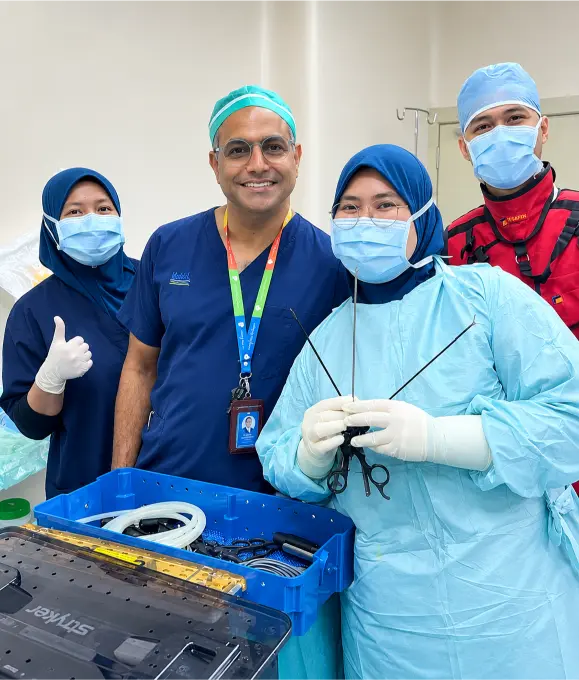
Hernia repair in children may be performed using an open or minimally invasive approach. With an open herniotomy, a small incision is made in the groin to reach the hernia and close the opening. In selected children, laparoscopic or keyhole surgery may also be considered. This uses small incisions, a camera and specialised instruments.
The choice between the approaches depends on the child’s condition, the type of hernia, previous surgery and the surgeon’s assessment.
What Happens Before Herniotomy?
Before surgery, the doctor will examine the child and ask about the swelling, when it appears and whether there is any pain or other symptoms. In many straightforward cases, an inguinal hernia can be diagnosed through a clinical examination. Additional tests may be considered when the diagnosis is uncertain or when another condition needs to be excluded. Parents will be able to discuss the proposed procedure, anaesthesia, possible risks and expected follow-up with the medical team before surgery.
Recovery After Herniotomy
Recovery varies from child to child and depends on the type of procedure and the child’s general health. After surgery, parents will receive instructions about caring for the wound, managing discomfort, bathing, activity and follow-up. The treating team will advise when the child can gradually return to normal activities. Any concerns after surgery, such as increasing pain, swelling, fever, wound problems or other unusual symptoms, should be discussed with the child’s healthcare team.
Herniotomy in Babies
Inguinal hernias can occur in babies, including premature infants. Because of their age and size, babies with an inguinal hernia require careful assessment by an appropriate medical team.
The timing of surgery depends on the baby’s overall health, gestational age, symptoms and risk of complications. If a baby has a groin or scrotal swelling, parents should have it assessed rather than trying to diagnose the cause themselves.
Frequently Asked Questions
Herniotomy is a surgical procedure used to treat an inguinal hernia in a child. The surgeon closes the opening that allows tissue to push into the groin.
Not always. Children's inguinal hernias are commonly related to a persistent opening from development, so the surgical technique can differ from adult hernia repair.
No. A groin or scrotal swelling can have different causes. A doctor needs to assess the child and establish the diagnosis before deciding whether surgery is needed.
In selected children, laparoscopic or keyhole surgery may be an option. The most suitable approach depends on the child's individual condition.
Yes. An inguinal hernia can sometimes become incarcerated, meaning the tissue becomes trapped. If its blood supply is affected, urgent treatment may be required.