

Lung Sequestration
Lung Sequestration in Children
Pulmonary sequestration is a rare condition present from birth where a portion of lung tissue develops separately from the normal lung and receives its blood supply from an abnormal artery. It can sometimes be found during pregnancy or later through imaging.
At Kids Laparoscopy, Dr Nada provides specialised paediatric surgical assessment for children diagnosed with lung sequestration. Your child’s scans, symptoms and overall health will be carefully reviewed before discussing the most suitable treatment.
What Symptoms Can Sequestration Cause?
The symptoms can vary depending on the type and size of the abnormal lung tissue. Some children may have repeated chest infections, coughing, wheezing or breathing difficulties. Others may have no symptoms and the condition may be discovered during an ultrasound, X-ray or other scan.Because the symptoms can be similar to other childhood respiratory conditions, detailed imaging is important when investigating suspected pulmonary sequestration.
How Is Lung Sequestration Diagnosed?
Imaging helps doctors understand the location of the abnormal lung tissue and, importantly, identify its unusual blood supply. A CT angiogram or other detailed imaging may be used to assess the lesion and its blood vessels before treatment. Identifying the abnormal artery is an important part of surgical planning.Your child’s medical history, symptoms and imaging results will be reviewed together to create an appropriate treatment plan.
Does Pulmonary Sequestration Need Surgery?
Treatment depends on the type of sequestration, its size, blood supply, symptoms and your child’s overall condition.
When surgery is recommended, the abnormal lung tissue is removed. The surgeon must carefully identify and manage the unusual blood vessel supplying the sequestration. Not every child will require exactly the same operation. The surgical approach is selected according to the individual child’s anatomy and needs.

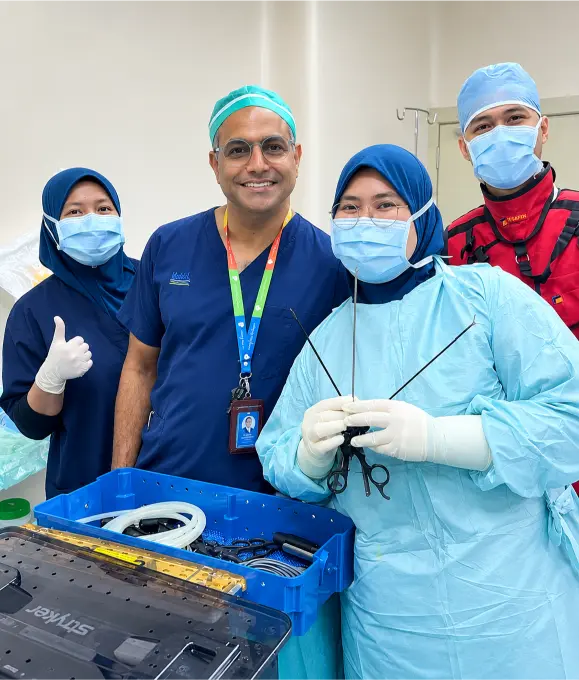
Keyhole Surgery for Children
For suitable children, pulmonary sequestration can be treated using thoracoscopic or keyhole surgery. This approach uses small incisions and a camera to allow the surgeon to work inside the chest. Studies have shown that thoracoscopic surgery can be used successfully for selected children with pulmonary sequestration, including infants. However, keyhole surgery is not appropriate for every case. The location of the sequestration, its blood supply, the child’s age and overall condition all need to be considered before choosing the surgical approach.
If you are looking for keyhole surgery for children Malaysia, a consultation with a paediatric surgeon can help you understand whether this approach may be suitable for your child.
Care Designed Around Your Child
Every child with pulmonary sequestration can have a different presentation. Some lesions are discovered before birth, while others are identified after repeated respiratory symptoms or during an unrelated scan. Dr Nada will review the available medical information and explain the diagnosis, treatment options and surgical approach in clear terms. Parents can also discuss the expected recovery and follow-up care before making a treatment decision.
What Happens During the Consultation?
During the consultation, Dr Nada will review your child’s symptoms, medical history and available scans or reports. The location and blood supply of the sequestration are important when planning treatment. If surgery is recommended, you will be guided through the procedure, the possible surgical approaches and what to expect before and after the operation. The goal is to help parents understand their child’s condition and feel informed about the next steps.
Why Specialist Paediatric Surgical Care Matters
Surgery for children requires careful consideration of their age, anatomy and overall health. Pulmonary sequestration also involves abnormal blood vessels, making detailed imaging and surgical planning particularly important. Choosing a paediatric surgeon experienced in minimally invasive procedures can help ensure that the treatment plan is based on your child’s individual condition rather than a one-size-fits-all approach.
Frequently Asked Questions
Pulmonary sequestration is a congenital condition where a section of abnormal lung tissue develops separately from the normal airway system and receives an unusual blood supply.
The condition can vary from child to child. Some children have no symptoms, while others may experience respiratory infections or other problems. Specialist assessment is important to understand the individual case.
Yes. When treatment is required, surgery to remove the abnormal lung tissue is commonly used. The appropriate treatment depends on the child's condition and the anatomy of the sequestration.
Yes. Thoracoscopic surgery has been used successfully in selected children with pulmonary sequestration. The suitability of keyhole surgery depends on the child's individual anatomy and condition.
Detailed imaging, including CT angiography in appropriate cases, can help identify the abnormal lung tissue and its blood supply.