

Laparoscopic Hernia Repair
Laparoscopic Hernia Repair for Children in Malaysia
A hernia occurs when tissue or part of an organ pushes through a weak area in the surrounding muscle or tissue. In children, an inguinal hernia commonly appears as a swelling or bulge around the groin. Early assessment by a paediatric surgeon helps identify the condition and determine the appropriate treatment.
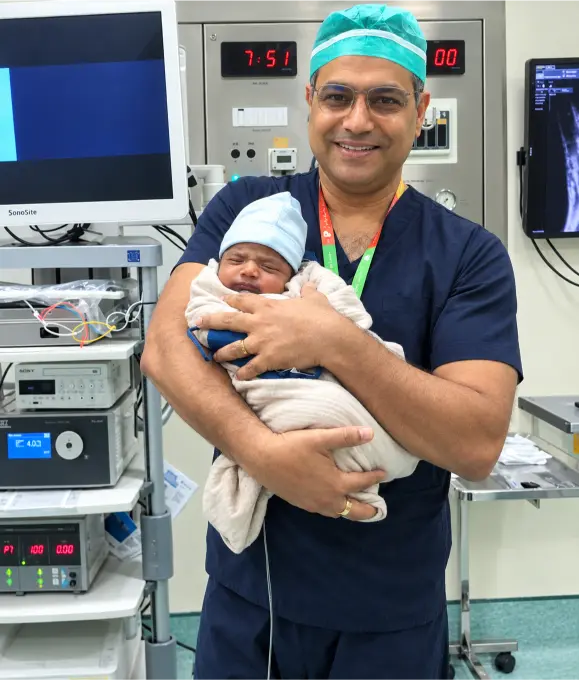
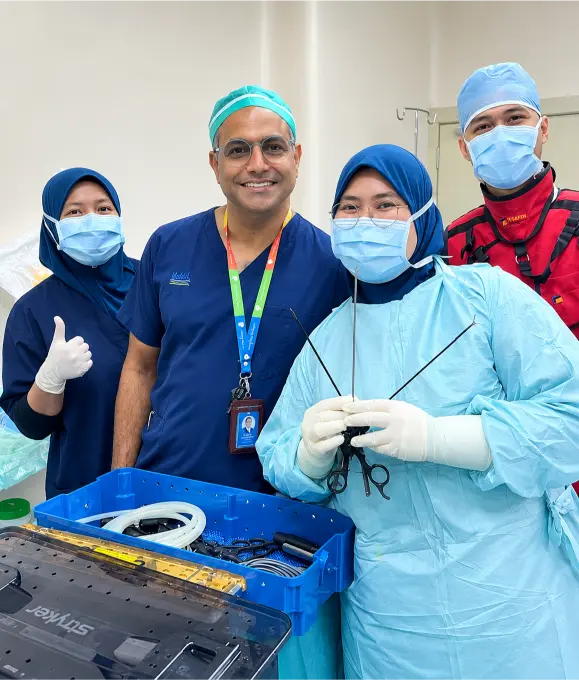
Dr Nada Sudhakaran, Consultant Paediatric Surgeon and Urologist, provides laparoscopic hernia repair for children in Malaysia. This keyhole surgery technique uses small incisions, a camera and specialised instruments to repair the hernia under general anaesthesia.
Dr Nada has more than 20 years of experience in laparoscopic surgery and more than 23 years of experience treating hernias. He has performed more than 6,000 laparoscopic procedures and has experience teaching laparoscopic surgery at Universiti Malaya.
What Is Laparoscopic Hernia Repair?
Laparoscopic hernia repair is a minimally invasive procedure that allows the surgeon to treat a hernia through small incisions. A laparoscope, which is a thin instrument with a camera, provides a magnified view of the internal structures on a monitor.
The procedure is performed under general anaesthesia. Small incisions are made in the abdomen, and carbon dioxide gas may be used to create enough space for the surgeon to work. Specialised instruments are then used to identify and repair the hernia.
The surgical technique depends on the type and location of the hernia, the child’s age and individual medical condition.
How Is Laparoscopic Hernia Surgery Performed?
During laparoscopic hernia surgery, the surgeon inserts a small camera and surgical instruments through the abdominal incisions. The camera provides a magnified view of the hernia and nearby structures.
The surgeon identifies the hernia and returns any protruding tissue to its appropriate position before completing the repair using a suitable technique.
Another feature of this approach is the ability to examine the opposite side during the same operation. If a hernia is found on the other side, the surgeon can assess whether treatment is appropriate for the child.
Laparoscopic Hernia Repair and Open Hernia Surgery
Laparoscopic and open surgery are two approaches to hernia repair. Open surgery generally involves an incision near the hernia, while laparoscopic surgery uses small abdominal incisions and a camera to view the internal structures.
Laparoscopy allows the surgeon to examine the opposite side during the same procedure. If a hernia is present on both sides, it may be possible to repair both during one operation when clinically appropriate.
Laparoscopic surgery may cost more than open surgery because it requires specialised equipment and surgical expertise. At Assunta Hospital, Petaling Jaya, Dr Nada provides laparoscopic hernia repair for children. Single-side or bilateral repair may be performed as a day-care procedure when suitable for the child.
The recommended approach depends on the child’s condition. The benefits, risks and expected costs of the procedure should be discussed with the surgeon before treatment.
Herniotomy, Herniorrhaphy and Hernioplasty
Parents researching paediatric hernia surgery may come across terms such as herniotomy, herniorrhaphy and hernioplasty. These terms describe different surgical techniques.
Herniotomy involves treating the hernia sac and is commonly used for paediatric inguinal hernias. Herniorrhaphy refers to repairing a weakened area with sutures. Hernioplasty generally involves strengthening or repairing the affected area using an appropriate technique.
The procedure depends on the type of hernia and the child’s clinical needs. Dr Nada assesses each child and explains the recommended surgical approach to the parents.
Benefits of Laparoscopic Hernia Repair for Children
Laparoscopic hernia repair, also known as keyhole surgery, uses small incisions, a camera and specialised instruments. The magnified view helps the surgeon examine the hernia and surrounding tissues during the repair. Potential benefits for children with an inguinal hernia include the following.
Clear and Magnified View During Surgery
The laparoscope provides an enlarged view of the hernia and surrounding tissues. This helps the surgeon guide the instruments and work carefully around nearby structures. The magnified view supports accurate surgical work, although laparoscopic surgery does not necessarily involve a laser.
Checking the Opposite Side for a Hernia
A child with an inguinal hernia on one side may also have a hernia on the other side. This occurs in around 15% of cases. Laparoscopic surgery allows the surgeon to examine the opposite side during the same operation.
With open surgery, checking the opposite side may require an additional incision. In around 85% of cases, no hernia is found on the opposite side, so an additional incision may not be necessary. Examining the opposite side helps the surgeon determine whether further treatment is appropriate.
Protecting Nearby Internal Structures
Laparoscopic surgery allows the surgeon to view internal structures from inside the abdomen. In girls, the surgeon can examine the area around the ovaries and fallopian tubes and take care to protect these structures during the repair.
Small Incisions and Less Noticeable Scars
Keyhole surgery uses small incisions in the abdomen. These incisions usually leave small scars that may fade over the following months as they heal. The final appearance varies from child to child.
Potentially Less Pain After Surgery
Some children may experience less discomfort after laparoscopic hernia repair because it uses small incisions. Recovery varies according to the child’s age, general health and the type of repair performed. Parents receive advice on pain relief, wound care and when their child can return to normal activities.
A Minimally Invasive Option for Childhood Hernia
Laparoscopic hernia repair is a minimally invasive option for treating inguinal hernias in children. It allows the surgeon to repair the hernia and examine the opposite side during the same operation. Dr Nada assesses each child before surgery and explains the recommended treatment, potential benefits and possible risks to the parents.
Paediatric Laparoscopic Hernia Repair by Dr Nada
Dr Nada Sudhakaran is a Consultant Paediatric Surgeon and Urologist with extensive experience in treating childhood hernias and performing laparoscopic surgery.
He has more than 20 years of laparoscopic surgery experience, more than 23 years of experience treating hernias and has performed more than 6,000 laparoscopic procedures. His experience also includes teaching laparoscopic surgery at Universiti Malaya.
Before recommending surgery, Dr Nada reviews the child’s symptoms, medical history and hernia type to determine the appropriate treatment.
Laparoscopic Paediatric Hernia Surgery at Assunta Hospital
Dr Nada provides paediatric laparoscopic hernia repair at Assunta Hospital, Petaling Jaya, Selangor.
Single-side and bilateral hernia repairs may be performed as day-care procedures when clinically appropriate. The suitability of this approach depends on the child’s health and the type of hernia.
Parents can discuss the proposed surgery, expected recovery, possible complications and postoperative care with Dr Nada before proceeding with treatment.
Assessment Before Laparoscopic Hernia Surgery
Before surgery, Dr Nada examines the child and reviews the symptoms and relevant medical history. This helps establish the type and location of the hernia and whether one or both sides may be affected.
The assessment also helps the surgical team plan the procedure, anaesthesia and postoperative care. Parents can ask questions about treatment options, potential risks and expected recovery before making a decision.
Recovery After Laparoscopic Hernia Repair
Recovery varies from child to child. Some children may experience less discomfort after laparoscopic surgery and return to light activities relatively quickly, depending on their condition and the procedure performed.
Parents receive instructions on wound care, activity and follow-up appointments. Small scars may fade over time, although the final appearance depends on the child’s healing process.
Parents should contact the treating medical team if the child develops increasing pain, swelling, redness, fever or other unexpected symptoms after surgery.
When Should a Child Be Assessed for a Hernia?
Parents should arrange a medical assessment if they notice a swelling or bulge around the child’s groin, scrotum or abdomen. The swelling may become more noticeable when the child cries, coughs or strains.
A hernia that becomes painful, firm or cannot be pushed back in needs urgent medical assessment, particularly if the child also has vomiting or significant abdominal pain. These symptoms may indicate a complication that requires immediate attention.
Laparoscopic Hernia Repair in Malaysia
Dr Nada Sudhakaran provides laparoscopic hernia repair for children at Assunta Hospital, Petaling Jaya, Selangor. With more than 20 years of laparoscopic surgery experience and more than 23 years of experience treating hernias, he assesses each child and recommends treatment based on their individual condition.
Enquire about laparoscopic hernia repair with Dr Nada to discuss your child’s condition and available treatment options.
Frequently Asked Questions
Laparoscopic hernia repair is a keyhole surgery procedure that uses small incisions, a camera and specialised instruments to repair a hernia. The appropriate technique depends on the child's condition.
Not every child is suitable for the same surgical approach. Dr Nada assesses the child's age, hernia type, symptoms and overall health before recommending treatment.
Herniotomy involves treating the hernia sac, herniorrhaphy refers to repairing a weakened area with sutures, and hernioplasty generally involves strengthening or repairing the affected area. The technique depends on the type of hernia and the child's needs.
Yes, both sides may be treated during the same operation if a hernia is identified on each side and the surgeon considers this appropriate. Laparoscopy also allows the surgeon to examine the opposite side during the procedure.
Laparoscopic surgery uses small incisions, which usually leave small scars. These may fade and become less noticeable over time, although the final appearance varies between children.
Recovery depends on the child's age, general health and the procedure performed. Some children return to light activities relatively quickly. Dr Nada provides postoperative instructions based on the child's condition.