

Vesico-ureteric reflux is a condition where urine flows backwards from the bladder towards the kidneys. It is one of the common causes of repeated urine infections in babies and young children.
At Kids Laparoscopy, Dr Nada provides specialist paediatric surgical and urological care for children with reflux. Parents receive clear answers, honest advice and a treatment plan made for their child.
Dr Nada Sudhakaran is a Consultant Paediatric Surgeon & Urologist with a special interest in laparoscopic or keyhole surgery. He provides paediatric surgical assessment and care for selected conditions in Kuala Lumpur and Petaling Jaya, Selangor, Malaysia. Intussusception can be an emergency. A child with severe or repeated abdominal pain, vomiting, unusual sleepiness, abdominal swelling, blood or mucus in the stool, or other concerning symptoms should receive urgent medical assessment. Parents should not delay emergency care while waiting for a routine consultation.
Normally, urine travels from each kidney down a thin tube called the ureter and into the bladder. A small valve-like flap at the bladder entrance stops urine from flowing back up. In children with vesicoureteral reflux, this flap is weak or the ureter enters the bladder at an unusual angle, so some urine travels back towards the kidney.
Reflux itself is not painful, but it can carry germs up to the kidney. This is why some children develop kidney infections, which may cause scarring if they happen again and again.
Many children are first diagnosed after a fever with a urine infection. Babies may feed poorly, vomit, seem unusually sleepy or cry more than usual. Older children may complain of burning when passing urine, needing to go often, tummy or back pain, or new wetting after being dry.
Some cases are found before birth, when a pregnancy ultrasound shows a swollen kidney. If your child has had a urine infection with fever, a review by a specialist is advised so the cause can be found early.

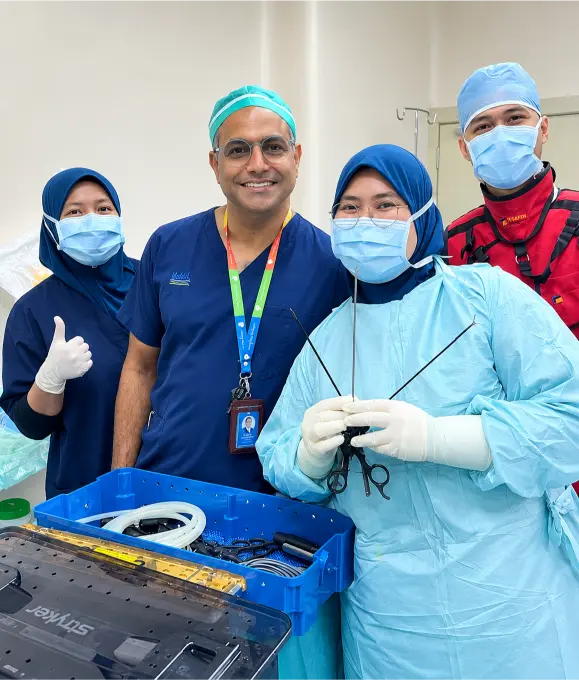
Diagnosis starts with a medical history and physical examination. The doctor will consider the child’s symptoms, age, general condition and abdominal findings.
An ultrasound scan is commonly used to assess the intestine and help identify intussusception. A contrast enema or other investigations may also be considered depending on the child’s condition and clinical findings. Early assessment is important because prolonged obstruction can affect the blood supply to the intestine.
Doctors describe reflux using five grades, from one to five, based on how far the urine travels and how much the ureter and kidney are stretched. In grade one, urine reaches only the lower part of the ureter. In grade two, it reaches the kidney without causing swelling. Grade three shows mild to moderate widening, grade four shows more widening with a twisted ureter, and grade five is the most severe, with marked swelling of the kidney and ureter. Lower grades are more common and often settle on their own as the child grows. Higher grades are more likely to cause infections or kidney scarring and may need closer follow-up or treatment. The grade is only one part of the picture. Your child’s age, infection history, kidney scans and bladder habits are also considered.
Diagnosis usually begins with a kidney and bladder ultrasound, which shows swelling and the size of the kidneys. The key test for reflux is a voiding cystourethrogram. A thin soft tube places a special fluid in the bladder, and X-ray pictures are taken while your child passes urine. This test shows whether reflux is present and which grade it is. A kidney scan called a DMSA scan may also be used to check for scars. Dr Nada explains each result in plain language and prepares your child gently for each test.
Treatment depends on the grade, your child’s age, how often infections occur and whether the kidneys show scarring. Many children with low grades are simply monitored. They may take a small daily dose of antibiotic to prevent infections while the reflux has time to improve. Treating constipation and teaching good toilet habits also helps.
Surgery or a procedure may be advised when infections keep happening despite preventive treatment, when the reflux is high grade, or when new kidney scarring appears. The goal is to protect the kidneys and reduce the number of infections.
One option is an endoscopic injection. A gel is placed at the bladder opening through a small telescope, with no cuts on the skin. It is a short procedure and suits selected children, although it may not work in every case.
The other option is ureteral reimplantation, an operation that places the ureter into the bladder wall in a way that stops urine flowing back. It has a high success rate in experienced hands. Dr Nada will explain which option is more suitable for your child and why.
Child Keyhole Surgery for Reflux
Keyhole surgery, also called laparoscopic or minimally invasive surgery, uses very small cuts and a tiny camera. For selected children, the surgeon can perform the reimplantation through these small openings with a clear, magnified view.
Possible benefits include smaller scars, less discomfort and a quicker return to normal activity. Keyhole surgery is not right for every child. The safest approach depends on your child’s age, size, anatomy and reflux grade. Dr Nada will assess your child carefully before recommending any operation.
Care and Follow-Up
After a procedure, your child is monitored closely while they recover, and pain is managed with suitable medicine. Most children go home within a short time and return to school after a few days to a couple of weeks, depending on the treatment.
Follow-up is an important part of care. Ultrasounds and sometimes a repeat bladder test check that the reflux has resolved and the kidneys are growing well. Parents are also told which signs to watch for at home, such as fever, unusual pain or cloudy urine.
Specialist Paediatric Care With Dr Nada
Hearing that your child has reflux can be worrying, especially after several infections. Dr Nada, Consultant Paediatric Surgeon and Urologist, provides specialist assessment and care for children with conditions of the kidneys, bladder and urinary tract.
Parents receive clear information about the diagnosis, the reflux grade, treatment choices and what to expect at each stage. Families are also welcome to ask for a second opinion if their child has already been diagnosed elsewhere.
It is a condition where urine flows backwards from the bladder towards the kidneys. It can lead to repeated urine infections.
The grades, from one to five, describe how far urine travels back and how much the ureter and kidney are stretched. Higher grades are more severe, but your child's age and kidney health also guide the treatment.
Many children, especially those with lower grades, improve as they grow. Regular follow-up shows whether the reflux is settling.
No. Many children are managed with monitoring and, in some cases, preventive antibiotics. A procedure is advised for repeated infections, higher grades or kidney scarring.
Yes, for selected children. A keyhole repair may be considered depending on the child's age, size and anatomy.
Contact Dr Nada’s Team To Arrange A Consultation And Get A Clear, Personalised Explanation.